TAGLARAWAN
Magic here is bought with memory. His family has been paying for generations.
The novel is finished. Readers on the list hear the date first.
Palawan, 1905. The empire has new flags. The old powers never signed a treaty.
Cornell-trained engineer Andres Naval comes home to Palawan to carry out his grandmother's cryptic last wish. The house he inherits is a conscious labyrinth. Its caretaker cleans in ritual loops and speaks to rooms that answer back.
And his own childhood has been edited. He had a twin. Every memory of them was excised by the Council, the order that governs magic in these islands, and no one will tell him why.
His inheritance is the Taglarawan, a living grimoire written in Baybayin, the script the islands were taught to forget. He cannot read it. His hand can; he wakes to drawings he does not remember making. Its magic obeys a single law, the Bayad: every truth learned and every spell cast is paid for in memory. A ward costs a face. A binding costs a wedding day. What it takes survives as cold fact, hollowed of feeling.
To finish what his grandmother began, Andres will have to spend the memories that made him. His guardian's trust. The pride in his work. The love that carried him home. The Council buries anyone who digs near the source of its power, and his grandmother dug.
“What we cannot fight, we must name.”
The electric glare from Meralco’s new arc lamps bled through the concha shell windows, a harsh clinical light battling the soft milky glow the shells were meant to create. It cast weak striped shadows across his drafting table. There, surrounded by the cold precise instruments of his new life — German brass protractors, steel-edged rulers — sat the photograph. A heavy albumen print on thick cardboard, its sepia tones capturing his Lola Amparing not as he remembered her, but as the camera had seen her: stern, unsmiling, her eyes fixed on something beyond the lens. In the gloom, a smile seemed to touch her lips, nothing more than a trick of his own longing. At the bottom, the photographer’s elegant stamp: Velasco, Fotógrafo.
He barely remembered the day. The sweltering heat, Lola’s rigid stillness, and the sudden violent whoomp of the flash powder, a miniature sun that bleached the world and left her ghost on a glass plate.
Three true things
The Babaylan
The most powerful person in a pre-colonial village was often not the chief. She was its healer, its calendar, its memory, and the one who argued with what could not be seen.
In the free Companion → ᜃCuyonon
In 1905, the language of Palawan was not Tagalog. It was a sea language that outlasted two empires, and the novel speaks it on the page.
In the free Companion → ᜆBaybayin
Seventeen characters, three rules, and a trust in the reader no alphabet since has matched. Type your name and watch it return to the older sound.
Try the name-writer →The Reader's Companion
A short, beautiful guide to the world the novel stands on: the history we were never taught, and a map of the made things. Sent straight to your inbox.
- The Babaylan, the healer who held a village's entire body of knowledge
- Cuyonon, the sea language of 1905 Palawan
- How to read and write your own name in Baybayin
- A glossary of the spirits, terms, and world of the novel
No spam. Just the lore, and word when the book is ready. If Gmail files it under Promotions, drag it to Primary so you never miss the launch.
A.B. Nostoria
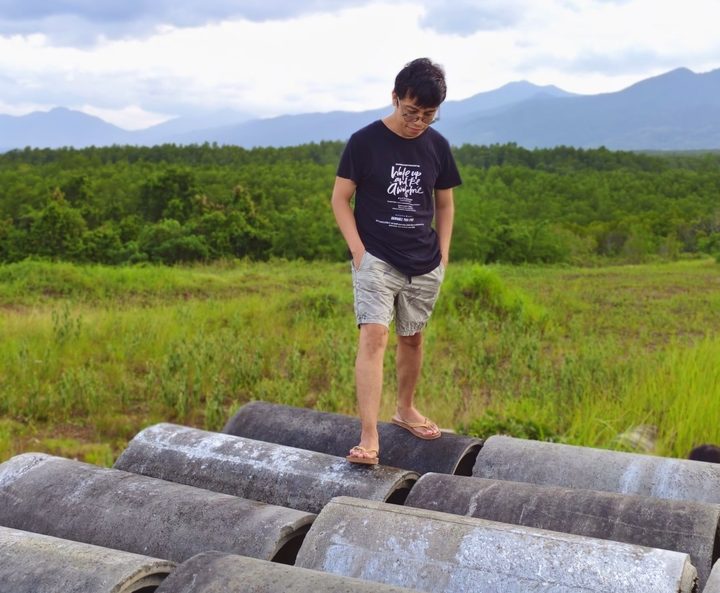
A.B. Nostoria writes Filipino historical fantasy from Puerto Princesa, Palawan, the province where Taglarawan is set. The stories are built from the beliefs, languages, and scripts the islands were taught to forget.
The writing happens on Instagram in public: myth, process, and the long road behind a finished book. Come say kumusta.
Literary representation and press: hello@abnostoria.org